Africa Hall and the 2026 WMF/Knoll Modernism Prize
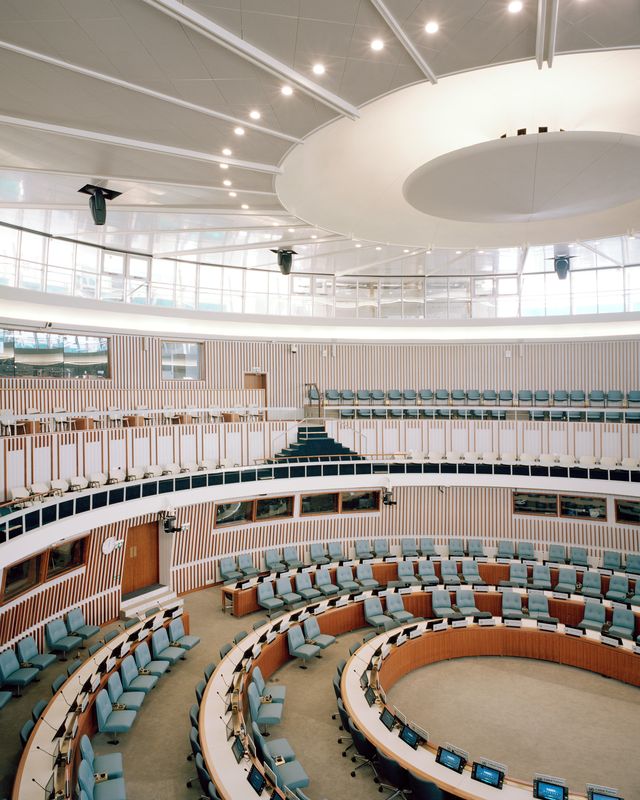
In 2026, Africa Hall re-emerged not simply as a restored building, but as a reaffirmation of Africa’s architectural and political identity. Awarded the World Monuments Fund/Knoll Modernism Prize, the project marks a quiet yet powerful milestone—the first time a site on the African continent has received this recognition since the prize’s inception.
Originally designed by Arturo Mezzedimi and completed in 1961, Africa Hall was conceived as a space for continental dialogue, later hosting the founding of the Organization of African Unity. Its architecture carried the optimism of a newly independent Africa—open, modern, and outward-looking. But like many modernist buildings, time was not entirely kind. Decades of wear left the structure fragile, its significance at risk of fading into memory.
The decade-long restoration (2014–2024), led by Architectus in collaboration with Ethiopian experts, approached the building not as an object to be replaced, but as a narrative to be carefully retold. There’s something almost delicate in that decision. Rather than imposing a new identity, the project worked to recover the clarity of the original design—restoring its concrete structure, conserving intricate mosaics, and reviving Afewerk Tekle’s monumental stained glass.
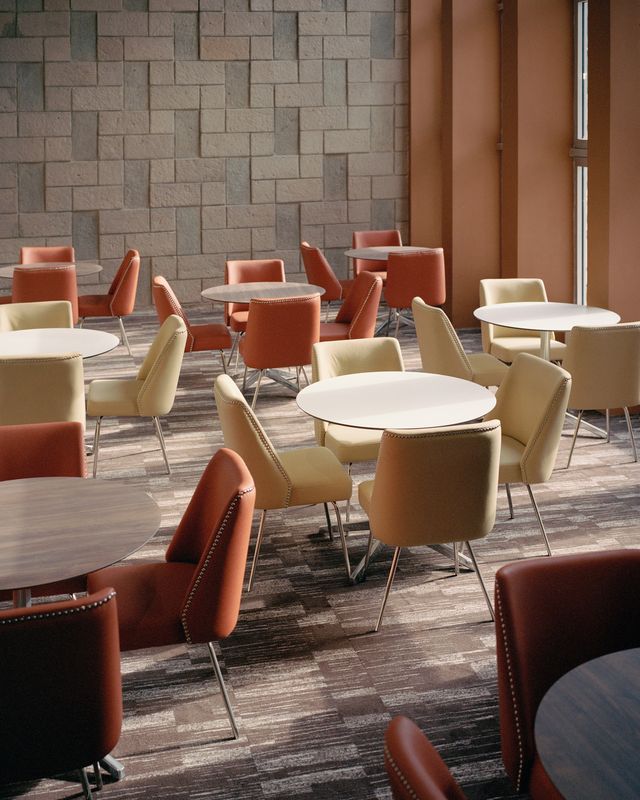
What’s compelling here is not just the technical achievement, though that alone is substantial. It’s the idea that modernism—often seen as universal, sometimes even detached—can still carry a distinctly African voice. Africa Hall seems to sit in that tension. It merges international design principles with local identity, suggesting that modern architecture in Africa was never simply imported, but reinterpreted.
The award itself recognizes excellence in conserving modernist buildings that might otherwise be overlooked or lost. In this sense, Africa Hall’s recognition feels overdue. It’s not just about preservation; it’s about relevance. The building has been reactivated as a venue for diplomacy and cultural exchange, continuing the role it was always meant to play.
And maybe that’s what makes this project stand out. It doesn’t freeze the past—it allows it to keep working. The restored halls, the careful reintroduction of light through Tekle’s glass, the renewed public and diplomatic functions—all suggest that architecture can carry history forward without becoming static.
There’s also a broader implication. For a long time, conversations around modernist heritage have been centered elsewhere—Europe, North America, occasionally Asia. Africa Hall’s recognition shifts that lens, even if slightly. It reminds us that African modernism is not peripheral; it is foundational, layered with its own political, cultural, and architectural weight.
In the end, Africa Hall is less about a single building and more about continuity. It stands at the intersection of past ambition and present responsibility—a place where architecture, diplomacy, and identity quietly meet again.