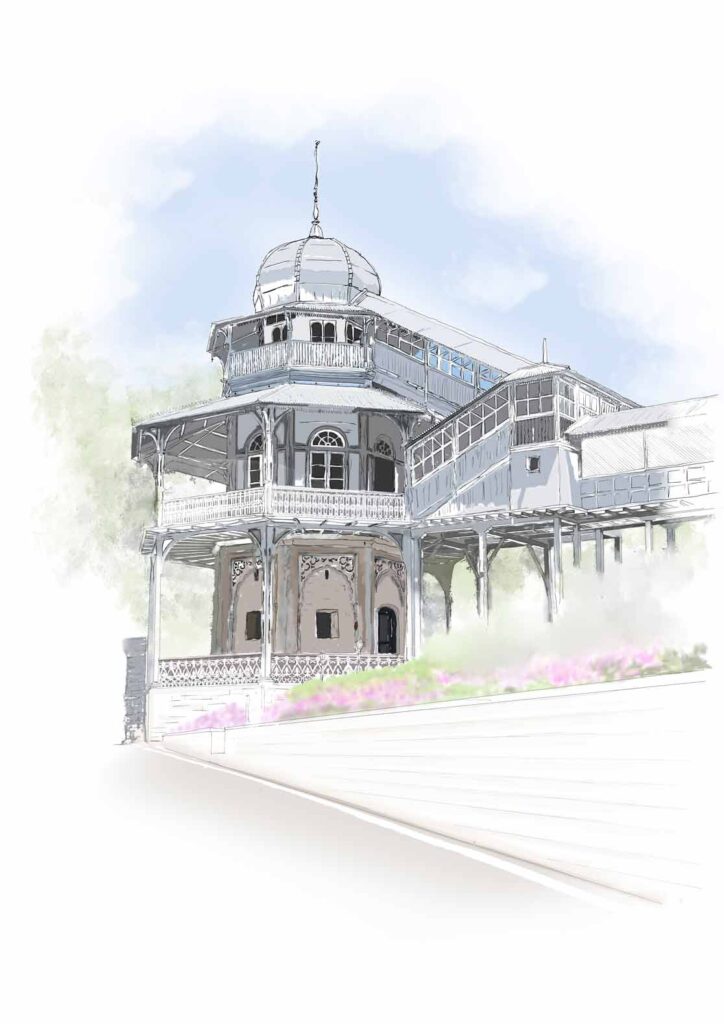
Once heavily guarded and off-limits, Menelik’s Palace now welcomes visitors to explore its history and scenery. Walking the paths of royalty and stepping inside grand buildings fosters a deep connection to the past. Some structures have stood since the city’s early days, silently witnessing generations come and go. This made me question what it would be like to hear stories told from their perspective. Among these sights, the Egg House intrigued me the most.
Since the early days of the city, I have observed countless transformations in both people and the environment. What was once a small military encampment turned into Ethiopia’s new capital, transitioning from scattered tukul(huts) settlements and pathways marked by movement to a dense city with buildings that stood tall and heavy traffic.
In the early days, life followed the rhythm of church bells, marking the start of each morning. Meals cooked over open fires, coffee ceremonies, and lively marketplaces defined daily routines. Holidays brought feasting, music, and processions, with Azmari musicians playing the krar(lyre) and masenqo. At Menelik’s palace, royal feasts were grand, while torches and oil lamps lit the growing city, blending rural traditions with urban development, and shaping Addis Ababa into the capital it is today.
Since the early 20th century, I have stood on the farthest side of the palace compound, a silent witness to history. A small, round structure with a distinctive egg-shaped design, I stand out among the grander buildings of the palace. Some say I was designed as a place of solitude and reflection for the emperor—a quiet retreat where he could seek moments of peace. Others believe I was once the residence of Empress Taitu, the emperor’s wife. At times, I also served a more mysterious purpose, being used for secret or private discussions. My secluded nature made me the ideal setting for discreet meetings and strategic planning. Some even suggest I may have been a place for the emperor’s recovery where medical consultations took place. Later in the Italian occupation, I stood witnessing Ethiopia’s resistance. Throughout the years I have silently borne witness to political intrigue, personal moments of reflection, and the shifting tides of history.
Though I stand as a testament to the city’s enduring history, much about me remains unknown. My stories are wrapped in mystery, adding to the intrigue of Menelik Palace. Whether as a royal retreat, a clandestine meeting space, or a symbol of imperial resilience, I continue to captivate those who seek to uncover Ethiopia’s regal past.