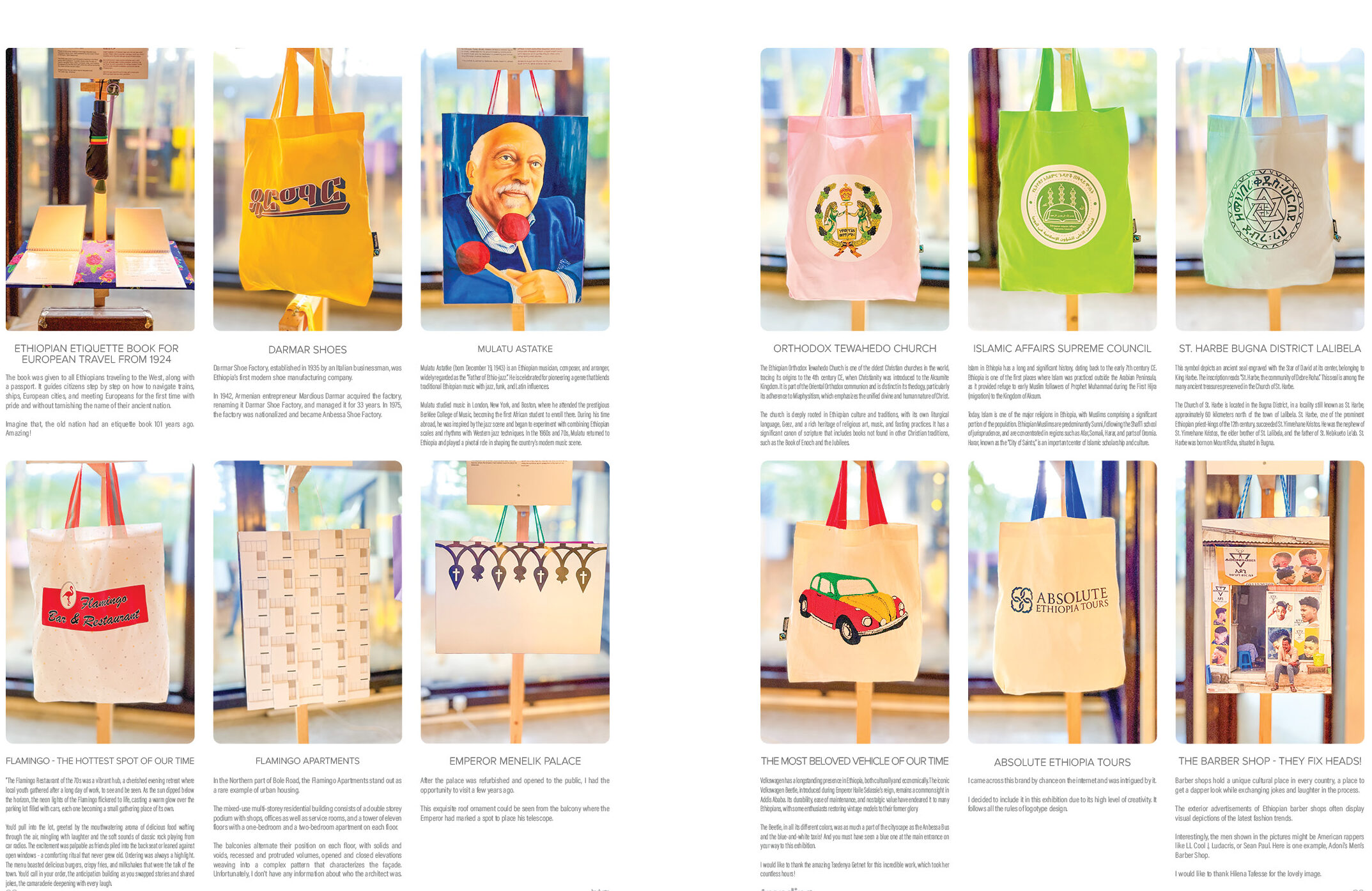
I would like to dedicate this exhibition to Mr. Mulatu Astatke (Ethiopian musician, composer, and arranger, widely regarded as the Father of Ethio-jazz), to the proud Ethiopians of the past and the creative of the present and future.
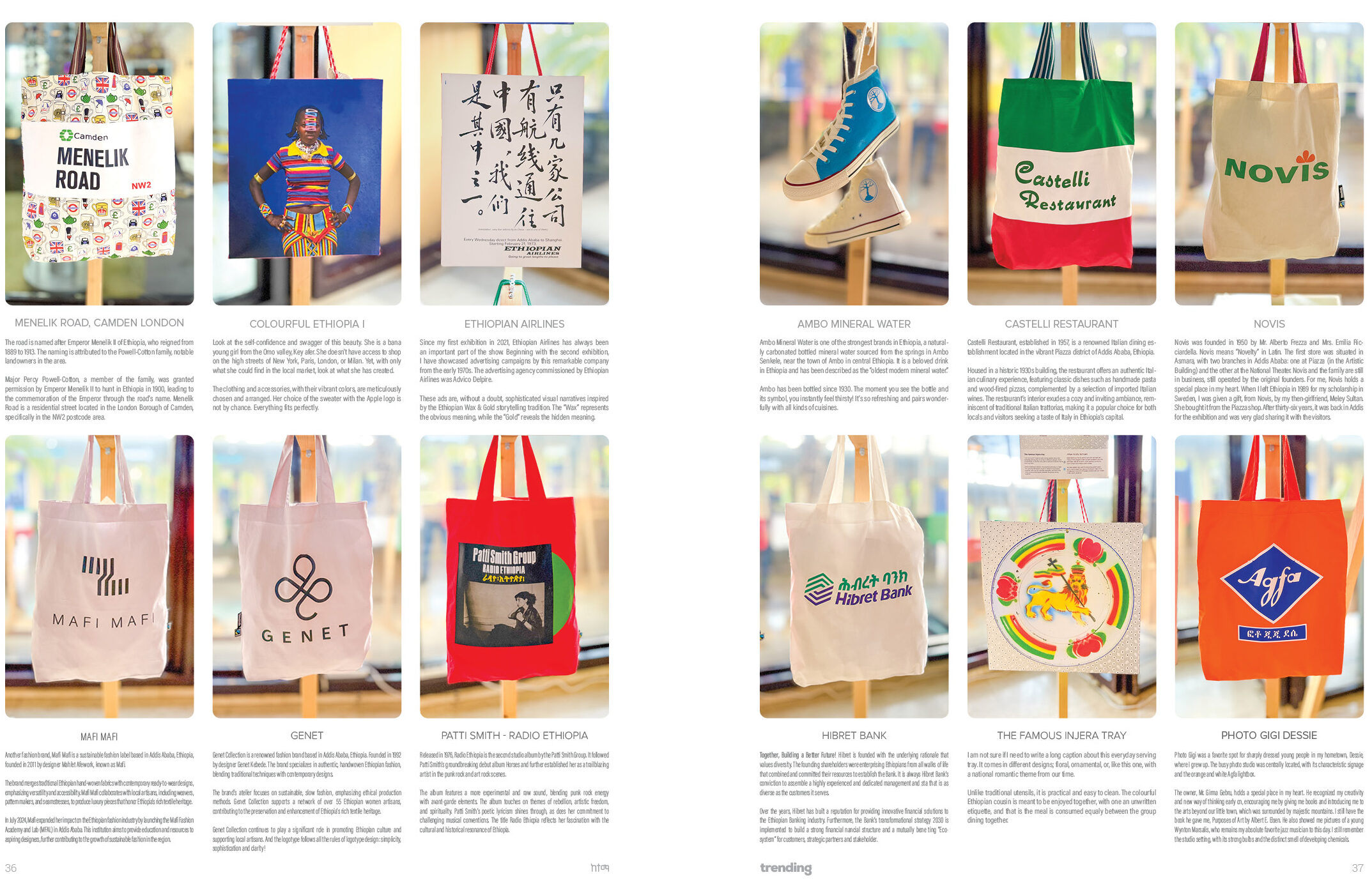
This is the fourth exhibition on Ethiopian brands and visual communication. The first exhibition in 2021 by the name Branding and Communication in Ethiopia for over 100 years was open to the public from 14 January – 15 March. The second one in 2022, 28 April – 29 June. And the third in 2023, 14 September – 15 November. At this same place, visitors could witness Ethiopia’s proficiency and awareness in the field of branding and visual communication, using strong symbols as early as 1889, when branding and visual communication was not perceived to be as essential as it is today in our global economy. So far, including this fourth exhibition, I have presented one hundred twelve Ethiopian iconic brands, and many more to come.
Symbols have always been used to build an emotional and psychological relationship between the message sender and receiver, they are vital tools to establish trust and promise. They say something, they stand for something, they touch and they have history. A reliable sign for a certain advantage; it could be faith, good deed, exercising power, politics, sports, unity, belonging, and today for selling all kinds of merchandise. When you see the Ambo symbol, you suddenly feel thirsty, and when you see The Red Cross symbol you feel a sense of safety and calmness. Usually, the brands with the bigger reach are better known commercially and more expensive.
My interest in older and iconic Ethiopian brands started many years ago by discovering Addis Ababa Hilton’s logotype designed fifty-six years ago in connection with the hotel’s opening in 1969. I was fascinated by how the beautiful Amharic letters were arranged geometrically in a humble and sublime manner. A respectful gesture by the designer and the management to the old nation and her people with their own distinct alphabet. That is building trust, which I mentioned earlier. And I have to admit that, I have a solid emotional bond with the hotel due to its majestic and fascinating architecture inspired by the rock-hewn churches of Lalibela.
I kept on looking for more symbols; refreshing memories from my youth, remnants of signs during my visits to Addis, books, and the internet for more. It is with great pleasure to be able to share with you what more I have discovered for this fourth exhibition. It is indeed fascinating that the leaders of the country during that time, organizations and companies understood the importance of communicating with powerful symbols, employing Amharic letters, and sometimes combined with European characters. The symbols and visual communication you are witnessing in this exhibition are executed skillfully with simplicity, sophistication, and honesty. Still fresh and cutting-edge to this day!
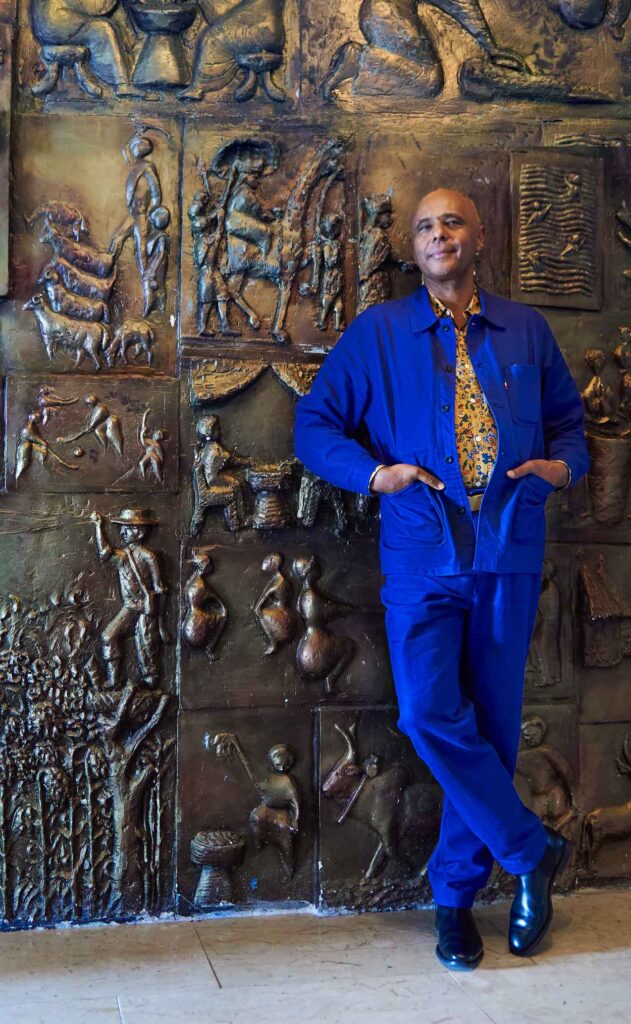
My name is Efrem Beyene. I grew up and studied in Dessie, a small town in the north-central part of Ethiopia and the former capital city of Wollo Region. I was sent to Sweden in 1989 (thirty-six years ago) by the Embassy of Sweden in Addis Ababa to study art. Before I left for Sweden I used to exhibit my paintings at Göthe Institut and Alliance Ethio-Française in Addis Ababa. Today, I work as an Art Teacher at the International English School in Stockholm. Prior to that, I worked for many years as a consultant in the field of Branding and Communication. I am very grateful for everything Ethiopia, my hometown Dessie and my school Woizero Sehin School in Dessie have taught me to meet the challenges in a far and different country with dignity. When you know where you come from, it is much easier to navigate where you are going.
For the fourth time, I would also like to use this opportunity to thank Mr. Claus Steiner, General Manager of Addis Ababa Hilton, for his genuine interest in this matter and his unconditional support to realize this fourth exhibition.
Thank you for visiting.
Keep Ethiopia plastic-free. Use textile or paper bags!