By Rasselas Lakew (Filmmaker)
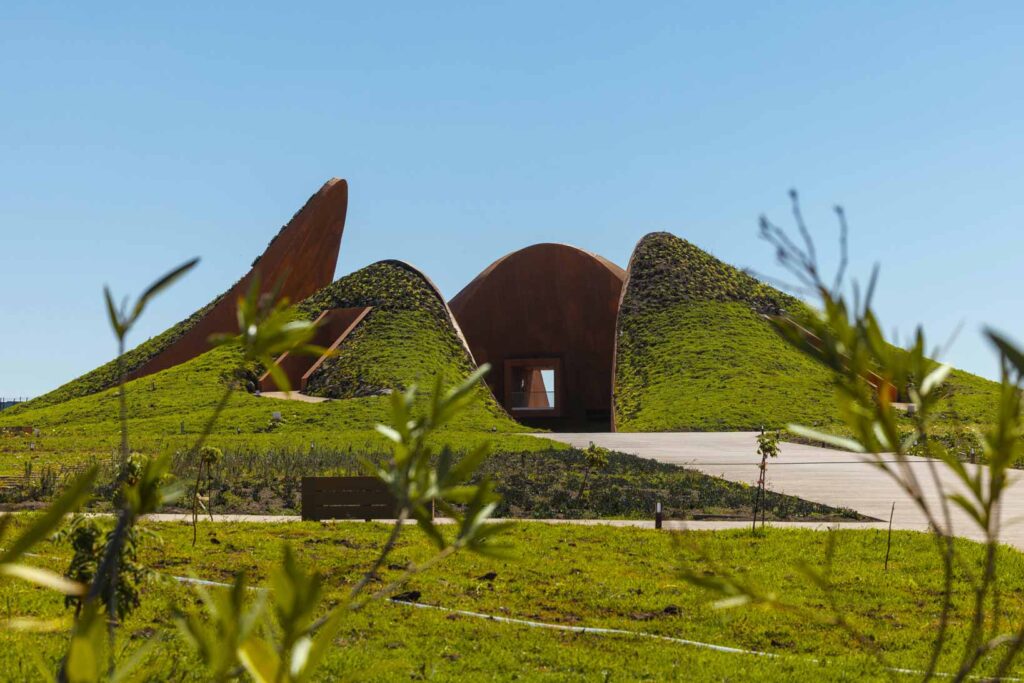
The aerial view of the ET-302 Memorial is reminiscent of an aircraft chronometer deliberately situated amidst expansive farmlands and a distant horizon. Lush meadows cover much of its surface and their patterns are thoughtfully integrated with the existing landscape. At its heart, the land is ripped open, and a nascent flower emerges – its petals looming over the unfolding bloom. In all its meanings, the chronometer holds a poetic space and tells time – not in hours but in seasons. Contemplating the verticality of the project, the architect perhaps envisioned an overhead facade, engaging with the eternal sky, and its ever-shifting atmosphere.
Interfacing with the space visitors navigate harmonic pathways that converge towards the memorial’s focal point, the budding flower, the rapture. The design and choice of material bring the visitors into a close encounter with the elements related to the tragic event. One installation features oxidized metal sheets, stitched together with aircraft nails, suggesting the piece of the ill-fated plane – not as a fallen relic but as a soaring monument. Standing in the flower’s core, one gazes upward toward the sky with the petals in view. At night, lights illuminate the rusted walls, transforming the floral form into an ember of life.
Among the concentric themes woven throughout the memorial site, one is characterized by individual stones, each with its unique form and composition. Together they form a sacred ring with a larger stone at their core, recalling the monolithic pillars of Tiya, a vernacular echo, further adding depth and gravitas to the memorial.