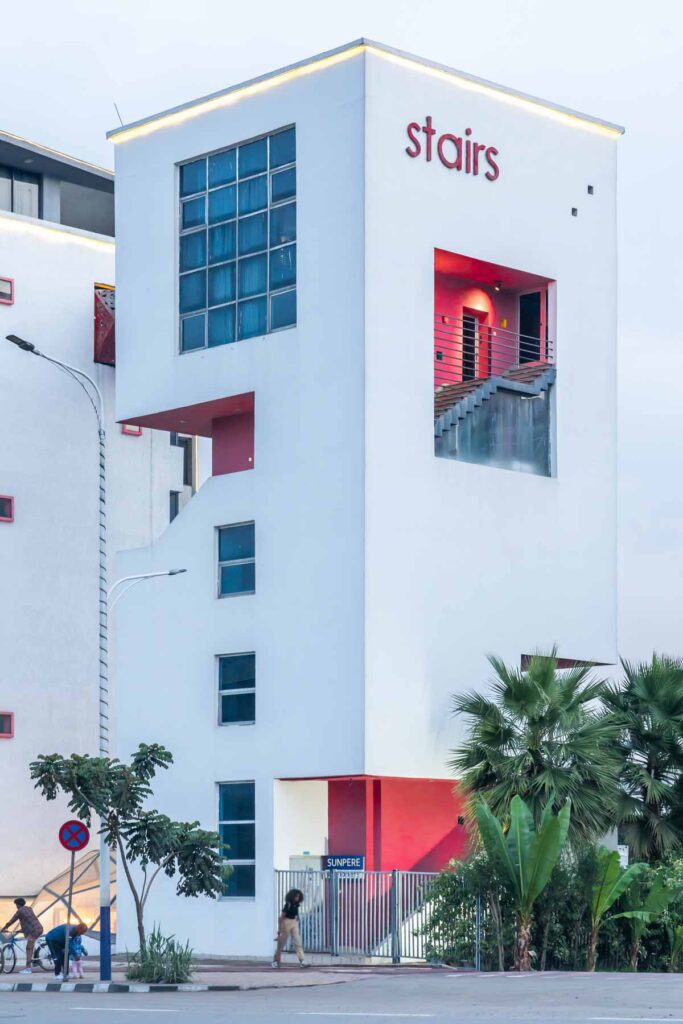
Set within the highland topographic condition of Addis Ababa, The Stairs stands as one of those rare buildings that quietly change how a city thinks about architecture. Its importance does not come from spectacle or novelty, but from something far more difficult to achieve: clarity. In a context where contemporary architecture often oscillates between imported modernism and nostalgic imitation, The Stairs offers a third position—one that is deeply modern, environmentally conscious, and unmistakably grounded in Ethiopian ways of thinking about land, movement, and collective life.
I encountered The Stairs at a moment when my own relationship to Addis Ababa was unsettled. Returning for an internship in the summer of 2013, for an extended stay as a graduate student, I found myself navigating a city that no longer aligned with my memory. Large infrastructural highways cut through familiar neighborhoods, and the pace of change was relentless. That dissonance sharpened my architectural eye. I began paying close attention not only to what was being built, but to how—and more importantly, why. Was the city producing architecture that understood its place, or merely structures that occupied it?
Architecture, in this sense, is never neutral. It is an expression of how a society understands and characterizes itself—philosophically, culturally, and environmentally. It reflects how people situate themselves in the world: how they read land and climate, how they negotiate limits and possibilities, and how they translate knowledge and conditions into built form. This self-characterization is inseparable from technology—not as a checklist of materials or systems, but as an index of intelligence, capability, and ethical choice. The built environment reveals what a society knows, what it values, and how responsibly it chooses to act at a given moment in time. In Addis Ababa, many contemporary buildings adopt globalized forms and technologies without such reflection, resulting in spaces that feel detached from their surroundings. Against this backdrop, encountering The Stairs felt almost improbable. Embedded within the urban fabric yet immediately legible, the building appeared neither foreign nor nostalgic. It felt considered. It felt intentional, and it’s uniquely fresh.
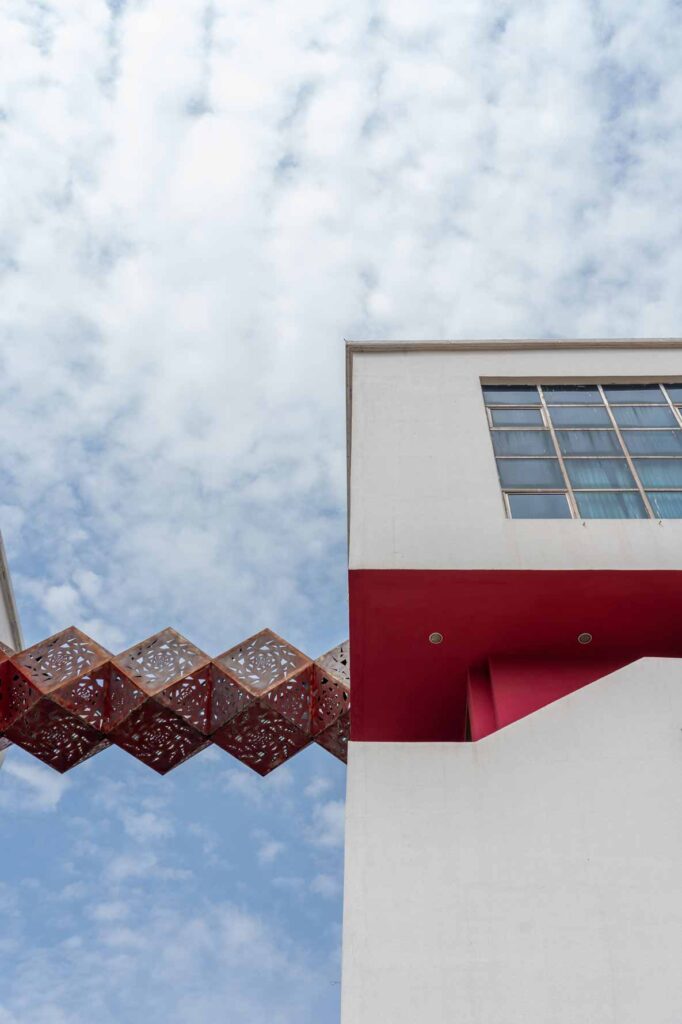
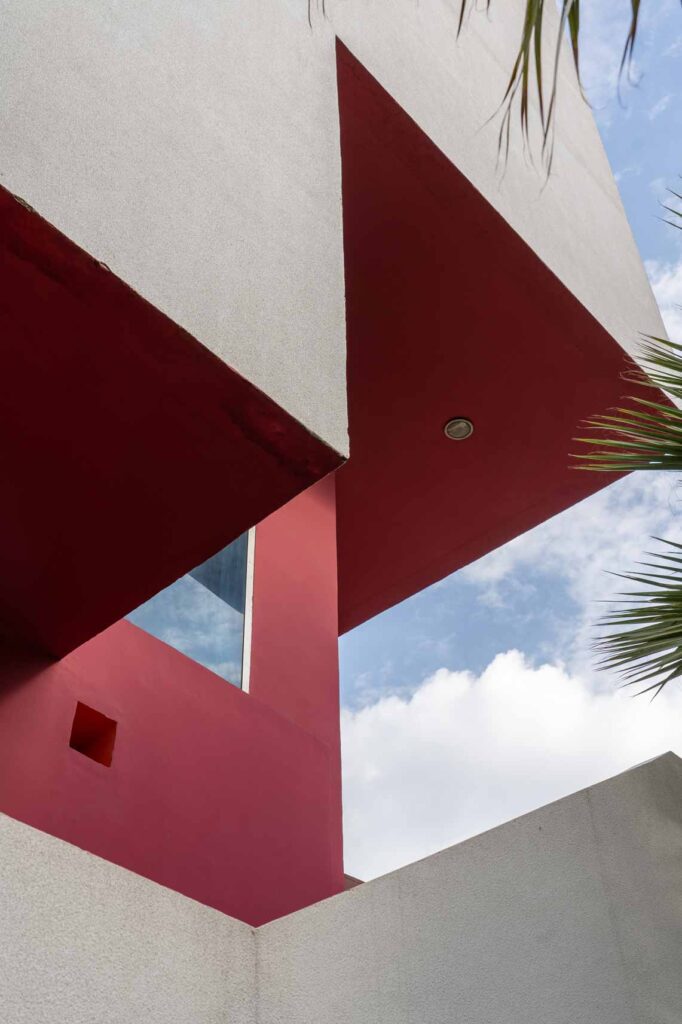
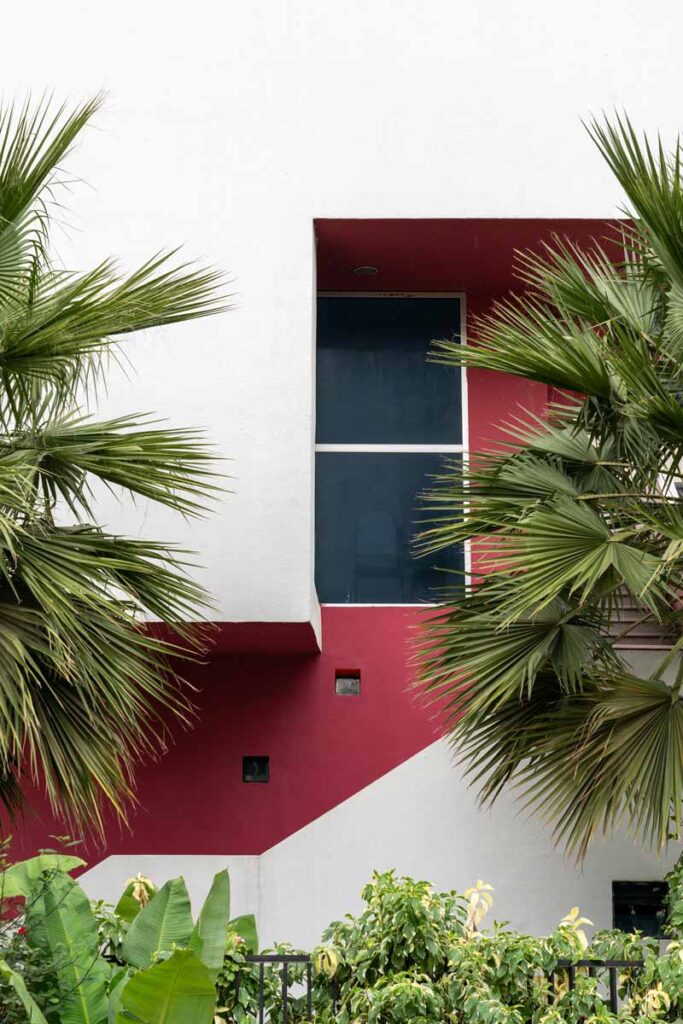
What sets The Stairs apart is its willingness to let the site lead—technically, environmentally, and culturally. The city’s topographic condition—so often treated as a technical obstacle—becomes the project’s primary generator, understood not as a constraint to overcome but as a condition to work with. In a city defined by rugged highland terrain, this approach resonates with long-standing spatial practices that engage slope through adaptation rather than erasure. Rather than flattening the terrain or imposing an external order, the building steps with the land, using its gradient as a framework for organization. Each terrace mediates between ground and structure, creating shaded platforms, ventilated thresholds, and moments of pause. These are not aesthetic gestures; they are acts of interpretation—technological and environmental decisions shaped by how the land is understood. In a city facing increasing heat and water stress, the building reduces solar gain while allowing light in and promotes passive cooling through porosity and layered massing, conserving water rather than contributing to runoff during periods of rain.
This way of thinking is deeply familiar within Ethiopian spatial traditions. Across the highlands, terraced agriculture and stepped settlements have long worked with gravity rather than resisting it. The intelligence lies not in appearance but in process—in understanding land as an active participant, interpreting its conditions through built form. The Stairs continues this lineage, translating it into a contemporary urban language without resorting to imitation. It does not reference tradition visually; it reasons through it.
This reasoning invites comparison with Lalibela’s rock-hewn churches, not as a formal precedent but as an intellectual one. Lalibela represents one of Ethiopia’s most profound architectural achievements precisely because it treats land, climate, and movement as inseparable. Carved downward into volcanic rock, the churches use mass and depth to regulate temperature, manage water, and choreograph ritual experience. Architecture there is not placed on the land; it is formed from it.
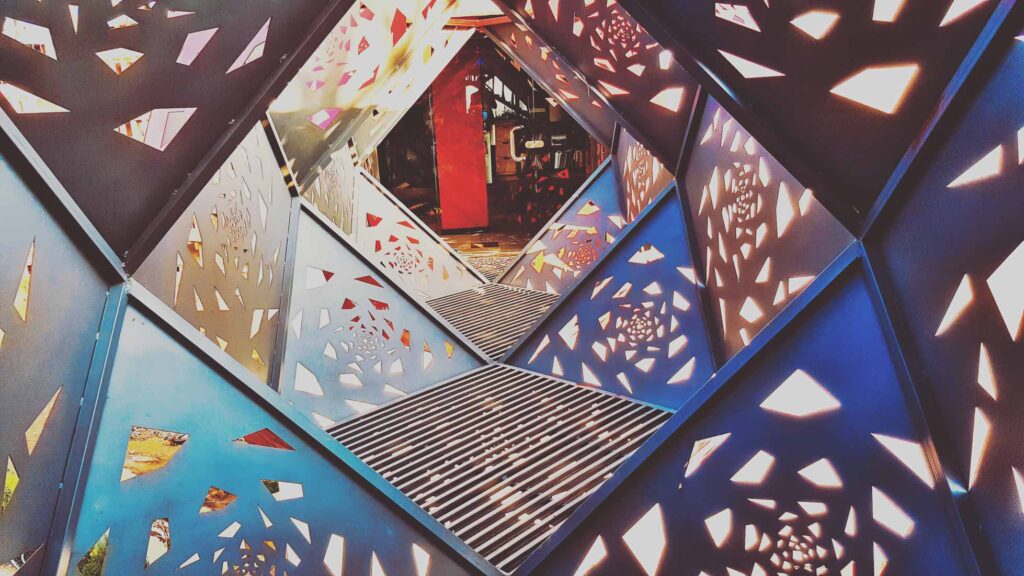
The Stairs operates as a contemporary inversion of that logic. Offspring of Lalibela, where Lalibela descends, the Stairs ascend. Where one is subtractive, the other is additive. Yet both are guided by the same foundational intelligence: architecture gains meaning when it emerges from its environment rather than dominating it. In this sense, The Stairs does not quote heritage—it extends it.
This continuity becomes clearer through the building’s spatial grammar. The stepped profile recalls hillside settlements across Ethiopia, where built form unfolds gradually, and social life is distributed across layered thresholds. Each landing on The Stairs functions as a small communal platform, softening the building’s mass while creating opportunities for encounters. Solid lower levels transition into increased porosity above, allowing light, air, and views to expand as one ascends. The result is a rhythmic experience—climactic, spatial, and social at once.
Movement is central to this rhythm. Ethiopian architecture has long been characterized by meaning embedded in movement rather than static form. In Lalibela, narrow paths guide worshippers downward, transforming descent into ritual—not only affirming humankind’s position beneath its Creator, but also embodying the hardship, sacrifice, and inward discipline required to draw closer to the divine. The act of moving through constricted, carved passages becomes a form of purification, where physical difficulty mirrors spiritual preparation. The Stairs reverses this sequence but retains its narrative quality. Ascending the building reveals shifting perspectives—toward the city, across terraces, into interior volumes—where movement is not merely vertical but cumulative. The building tells its story step by step, dimensionally unfolding understanding and awareness through the act of ascent itself.
The Stairs avoids overt symbolism. There are no historical motifs, no ornamental shortcuts to identity. Its Ethiopian character emerges through spatial logic, environmental ethics, and technological restraint. This choice reflects an understanding that cultural continuity does not require replication, but translation. Architecture here becomes an act of interpretation rather than display—an approach that respects heritage without freezing it in time.
Within the broader trajectory of Ethiopian modern architecture, The Stairs reads as a point of orientation—a project that recalibrates expectations rather than simply exceeding them. It demonstrates that it is possible to remain rooted in identity while engaging contemporary realities: urban density, climate stress, material constraints, and evolving social patterns and consciousness. Its terraces function not only as environmental devices but as social infrastructure, creating layered transitions between public and private life. In doing so, the building resists the isolating verticality common in many modern developments and instead remains in conversation with the city.
If The Stairs can be understood as a quiet catalyst, it is not because it announces a new style, but because it re-centers architectural priorities. It reminds us that modernity does not require erasure. That innovation does not demand detachment. That environmental consciousness is most powerful when it is culturally embedded.

What the building ultimately offers is a way forward—one that allows contemporary Ethiopian architecture can be both globally conversant and locally grounded. Its design intelligence comes from being a keen listener that first turns inward—towards the climate, towards the slope, towards the social patterns of everyday life, and towards the centuries of knowledge embedded in Ethiopia’s built heritage. It demonstrates that architecture gains meaning not by imposing form, but by interpreting the conditions from which it emerges.
If future projects take this as a point of departure, Addis Ababa’s architectural evolution may move beyond expansion toward something deeper—a renewed relationship between land, identity, technology, and the built environment.
The Stairs does not resemble Ethiopia’s historic monuments, but it reasons alongside them. And it is this shared reasoning—place-based, environmentally attuned, and ethically grounded—that positions the building as a defining moment in Ethiopia’s contemporary architectural discourse.