In today’s world, simplicity is key. Our everyday items, from clothes to buildings, are all about minimalism. Smooth surfaces, muted colors, and simple designs rule the day. We prioritize speed, efficiency, and consistency, often choosing for the fastest solution available.
This minimalist trend has become so ingrained that we hardly realize how much character has been stripped from our environment. While things may seem more streamlined and practical, they also feel somewhat limited. This focus on less is subtly influencing our lifestyles.
In the past, creating things was about adding layers of meaning. Objects had texture, color, and unique details that showed the creator’s touch. Clothes were stitched with care, tools were crafted purposefully, and buildings were constructed with intricate details. Each element contributed to a bigger narrative. There was no rush, and nothing was seen as easily replaceable. Making things was a way to express identity, take pride, and be fully present. This mindset valued richness as a necessity, not just a choice.
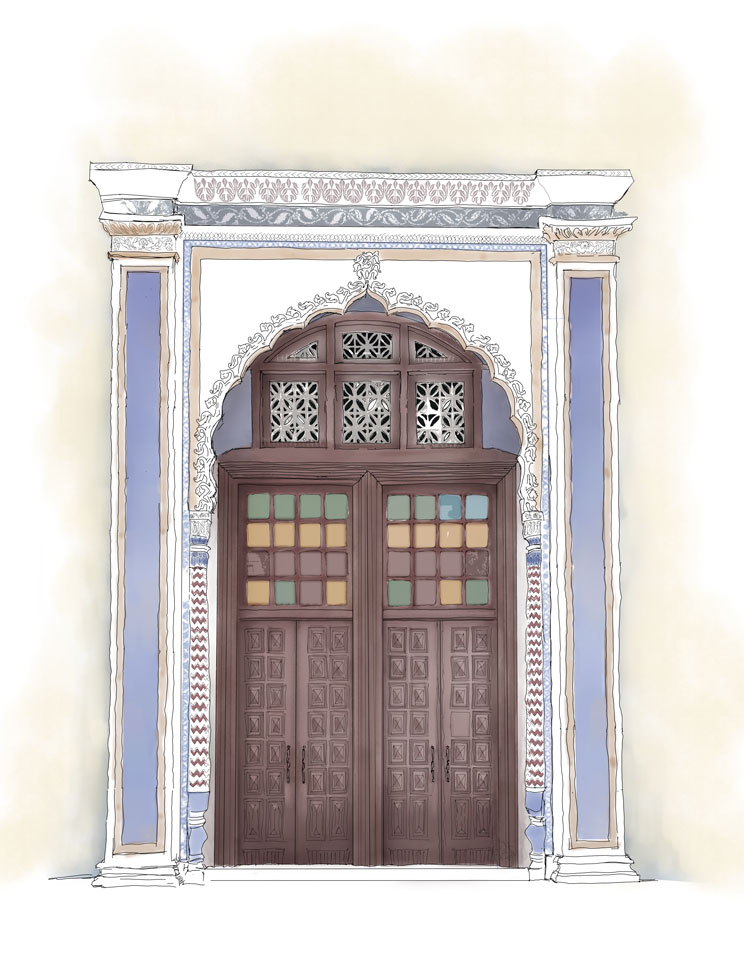
One of the doors of the Gibr Adarash (ግብር አዳራሽ), the grand banquet hall of the Menelik Palace, showcases Menelik-era craftsmanship in full. Tall and graceful, the wooden door is meticulously carved, with panels that reveal careful joinery and a subtle, rich composition of colors. Every detail, from the motifs to the finishes, reflects the hands of skilled artisans who understood that each choice conveyed authority, ceremony, and cultural identity.
The door’s design catches your eye with its scale and detail, blending strength and elegance. It reflects a time when quality meant adding depth, presence, and purpose to the crafted item.
Standing before the Gibr Adarash door, one can feel the presence of an era that valued depth and care. This contrasts with our present world, where the ideology of less shapes almost everything we create. Today, objects, clothing, interiors, and even architecture favour simplicity, uniformity, and efficiency. The richness of detail has been replaced by speed and practicality, and much of the expressive, tactile language of the past has faded.
Not everything needs to be muted, and not everything needs to have character. The things we make should not lose their capacity for expression and detail, even when they are produced faster and shaped by the demands of their time. Simplicity does not have to mean absence; it would be worth considering to leave room for expression, meaning, and character.