I took a break, one I genuinely needed. I didn’t have a big plan for it; I just wanted a bit of a pause from the everyday rhythm and repetition. Even without a plan, I wanted to reward myself with something. And I kept wondering, what do people actually do when they take a break? For me, getting out of the city seemed right, to experience something completely different. Luckily, my newlywed friends called, invited me to celebrate Meskel with them in Hosanna.
Meskel is a once-a-year celebration and usually one that many look forward to during the year. It is common to find families traveling back to their hometowns, often rural areas, to celebrate together. It is something that doesn’t just happen; people plan and prepare for it, carrying the excitement in their hearts throughout the year. A full Meskel celebration on the rural side was a rare invitation, and I was thrilled to see my first one there.
We reached her home in the afternoon, and people were already arriving from the city as festivities gradually started. This all led up to Demera—the Meskel fire—warming faces while songs filled the air. Children running around it, adults joining in song, and life pulsating in the courtyard. The food felt endless, with everyone insisting us to eat more and more, even when we were already full. It was a way of taking care of us—making sure you were fed, comfortable, and welcomed with warmth. Meskel is that anchor to the community, that one moment when everyone comes back together, sliding seamlessly into shared rhythms as a house fills with laughter and shouts, playful chaos. Then we went totally crazy playing a game of Imposter, creating so many joyful moments. Her dog, who had come from the city, contributed to the lively ambiance. And this went on for the couple of days that we were there, each day getting more vibrant and making every hour feel alive.
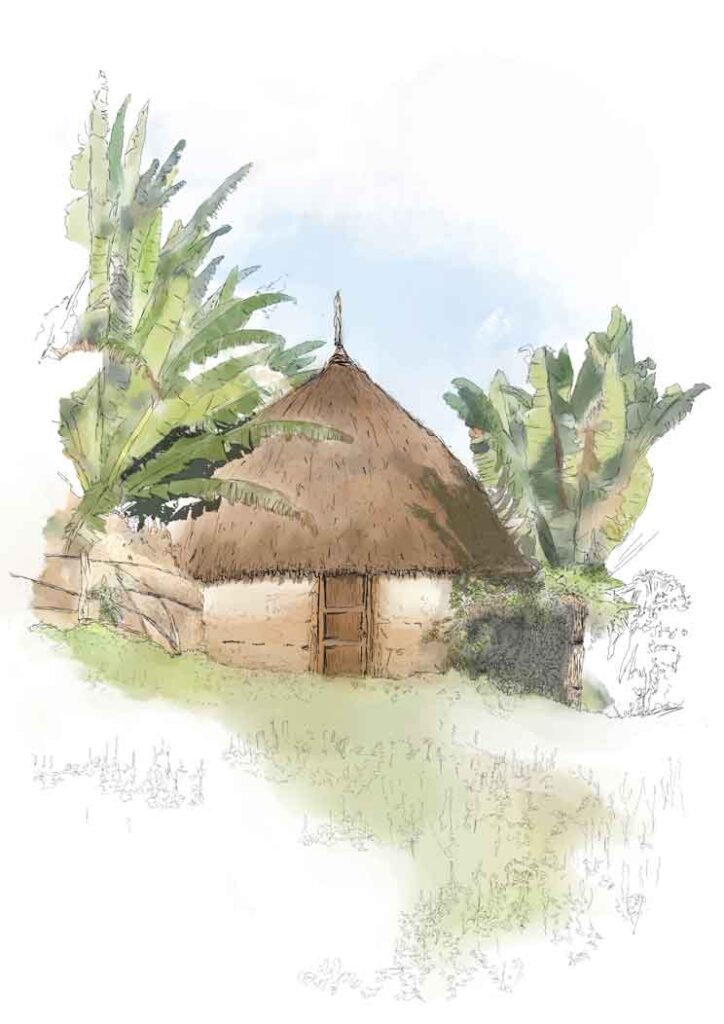
On one of the days, as we wandered through the town, a single hut stayed with me. Though just a simple structure, it quietly became a landmark, that carried the rhythm of those days and the life experienced there and portrayed the spirit of the town. I write about the celebration, but sketched something totally different, the lively celebration of Meskel contrasted the quiet stillness of this hut. That contrast is what gave it meaning. The hut became the symbol of the unseen, its humble walls holding all shared moments in one quiet form; in its simplicity, it anchors memory, an image capable of distilling the trip into one single picture that carries the weight of everything we lived, felt, and saw.