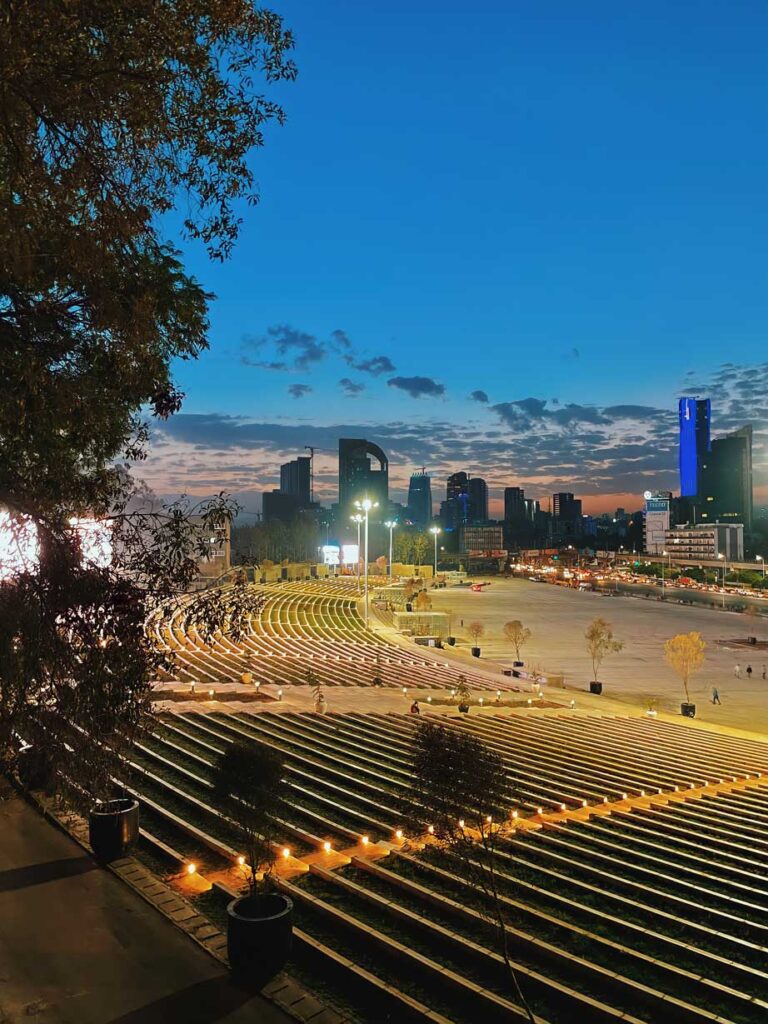
The article on Meskel Square in Addis Ababa illustrates the complex history, significance, and challenges of maintaining one of the city’s most powerful public spaces. Originating as a religious site in the 1960s, Meskel Square has evolved over decades, adapting to different political regimes, social demands, and urban development initiatives. Today, it represents not only a historical and cultural landmark but also a contested space in urban planning, accessibility, and public life. The current renovation project aimed at preserving and enhancing this iconic site exemplifies both the potential and the pitfalls of urban development initiatives.
At the heart of Meskel Square’s value lies its role as a gathering place, central to both the spiritual and everyday life of the city. Established to accommodate the annual Meskel celebration of the Ethiopian Orthodox Church, it has remained the focal point for these gatherings, drawing worshippers, leaders, and international visitors. The square’s location and design, including the open plaza and terraced seating, fostered a sense of community while enabling spontaneous activities like jogging, football, concerts, and rallies. This adaptability is what made Meskel Square a vital urban space, hosting both organized events and impromptu gatherings. However, the article argues that the very essence of such a dynamic public space is now threatened by limitations on access, lack of free use, and constraints on previously common activities.
Historically, Meskel Square has been a stage for significant changes, including the transformation into Revolution Square during the Derg regime in 1974. This change illustrated a shift in function and symbolism as the square became a site for state-sponsored military parades rather than a community gathering place. Later, in the 1990s, the Ethiopian People’s Revolutionary Democratic Front restored the square’s original name, and it once again became accessible to the public for daily life activities, celebrations, and demonstrations, symbolizing resilience and continuity.
The recent renovations under the Beautifying Sheger initiative highlight an effort to modernize the space while respecting its traditional layout and role. Improved facilities, underground parking, and secure pedestrian paths showcase an attempt to blend functionality with respect for Meskel Square’s history. However, the requirement to pay for entry contradicts its intended openness, which historically supported equal access and inclusivity. The entry fee, albeit modest, restricts certain residents from enjoying the square, impacting the sense of community and limiting its accessibility, particularly for low-income residents and those who have relied on it for daily exercise or as a meeting place.
Moreover, the project exemplifies the challenges of balancing security and inclusivity in urban design. Security measures, which include lighting, surveillance, and personnel, ensure a safer space, especially for women, children, and vulnerable groups. This is a critical advancement in creating a welcoming environment. However, the strict supervision and enforced fees subtly alter the square’s character. Once a democratic space where people could freely engage in physical activity, host local markets and partake in casual gatherings, Meskel Square is now experiencing a decline in these informal activities. The added restriction discourages spontaneous social interactions, which are integral to the cultural fabric of Ethiopian communal life.
The emphasis on controlled access and monetization highlights an ongoing challenge in urban planning. Public spaces, particularly in densely populated cities like Addis Ababa, are scarce and must serve diverse purposes. Yet, commercialization may undermine the square’s role as a symbol of collective ownership and access. For many residents, such spaces are not mere luxuries but essential to urban well-being and social cohesion. Urban planners must, therefore, find alternative funding strategies that do not compromise the equitable nature of these communal areas. Free, accessible public spaces foster community spirit, support informal economies, and provide a necessary counterbalance to the private realms of urban life.
Meskel Square’s evolution and the ongoing challenges it faces reflect the broader narrative of public space in urbanizing Africa. The article’s underlying message is a reminder of the importance of preserving such spaces as inclusive, vibrant places that mirror the diversity and dynamism of the city’s people. Meskel Square is more than an urban landmark; it is the living, breathing heart of Addis Ababa, and its future as an open space for all must be protected. Balancing modernization with cultural and social needs is a delicate act, yet it is crucial to retain Meskel Square’s role as a public stage where the city’s history, traditions, and daily life converge. //